Use edge processing where a local decision must remain fast and available near the sensor. Use centralized or cloud processing where elastic scale, cross-site coordination, large searches and managed analytics matter. Most real deployments are hybrid: local capture and immediate decisions, centrally governed identities, policies, models, audit and investigation.
“Where is the biometric processed?” is not one question
A biometric workflow contains several functions that can live in different places. Capture may occur on a terminal, quality and liveness may run on the device, matching may happen in a local controller or central service, and access policy may be evaluated elsewhere. Enrollment, template distribution, monitoring and audit have their own placement decisions.
Acquire face, fingerprint, iris or palm data from a known sensor and transaction.
Assess usability and presentation-attack signals close to capture or in a service.
Extract a biometric representation using a defined algorithm and version.
Compare one-to-one or search one-to-many against the relevant gallery.
Evaluate identity with current site, time, role, visit, zone and safety policy.
Protect events, exceptions, retention, model rollout, health and audit centrally.
Calling a system “edge” because matching occurs on a terminal can hide cloud-based enrollment and management. Calling another system “cloud” can hide local quality checks, encrypted cache and offline access rules. Document the placement and data flow of every function instead of accepting a single label.
Edge, cloud and hybrid each move—not eliminate—tradeoffs
| Design factor | Edge emphasis | Cloud or central emphasis | Hybrid control |
|---|---|---|---|
| Decision latency | Short local path can support fast door or lane response | Depends on network path, service and region | Keep immediate policy local; synchronize broader context |
| Connectivity loss | Can continue within cached policy and identities | Remote-dependent functions may pause | Define offline scope, cache age, revocation and reconciliation |
| Scale | Capacity is distributed across deployed hardware | Pooled compute can expand for large search and analytics | Burst complex workloads centrally while protecting local service |
| Data movement | Can filter events and avoid streaming all raw media | Central services receive data needed for processing | Send metadata, selected evidence or templates according to purpose |
| Operations | Many physical nodes need inventory, patching and health monitoring | Central services simplify some upgrades but create shared dependencies | Use controlled fleet and model management with staged rollout |
| Failure domain | One edge failure may affect one lane or site | Central outage can affect many consumers | Isolate critical decisions and provide degraded modes |
| Security | Physical exposure and distributed secrets require protection | Concentrated data and administrative access increase impact | Authenticate every component, minimize privilege and encrypt flows |
Edge does not automatically mean private or secure
Local processing can reduce the raw data sent elsewhere, but an unmanaged appliance with default credentials, unprotected storage or stale software creates risk at the site. Physical access, secure boot, signed updates, key protection, network segmentation, least privilege and tamper-aware operations still matter. NIST’s hardware-enabled security work explicitly addresses platform security for both edge and cloud use cases.
Cloud does not automatically mean slow or uncontrolled
A well-designed regional service can deliver predictable performance and strong centralized controls. It can also support elastic search, common policy and consolidated monitoring. The organization must still understand tenancy, data location, subprocessors, access, encryption, availability, incident handling, export and deletion. NIST cloud guidance recommends assessing both the opportunities and risks of outsourcing data, applications and infrastructure.
Hybrid is an architecture, not a compromise word
Hybrid only becomes useful when the boundary is explicit. Define what happens locally, what is synchronized, how conflicts are resolved, how long cached data remains valid, what a disconnected node may authorize, and which central command immediately changes local state. Without those answers, “hybrid” can become two systems with ambiguous authority.
Place computation according to the workload
Door and turnstile access
A person expects a result in a fraction of the overall passage time. Local comparison and policy cache can keep a FacePass lane responsive during normal network variation. Central management can distribute identities and schedules, collect events, revoke access and monitor device health. The offline rule should be narrow: which identities, zones and time windows remain valid, for how long, and what happens when revocation cannot be checked?
Remote enrollment and identity proofing
A browser or mobile app benefits from centralized workflow, document services, duplicate search and review. Some quality, compression and liveness checks can run on the endpoint; sensitive comparison and evidence management may be centrally controlled. The capture path needs protection against virtual sources and injected media, as discussed in our face liveness guide.
Video analytics and alerting
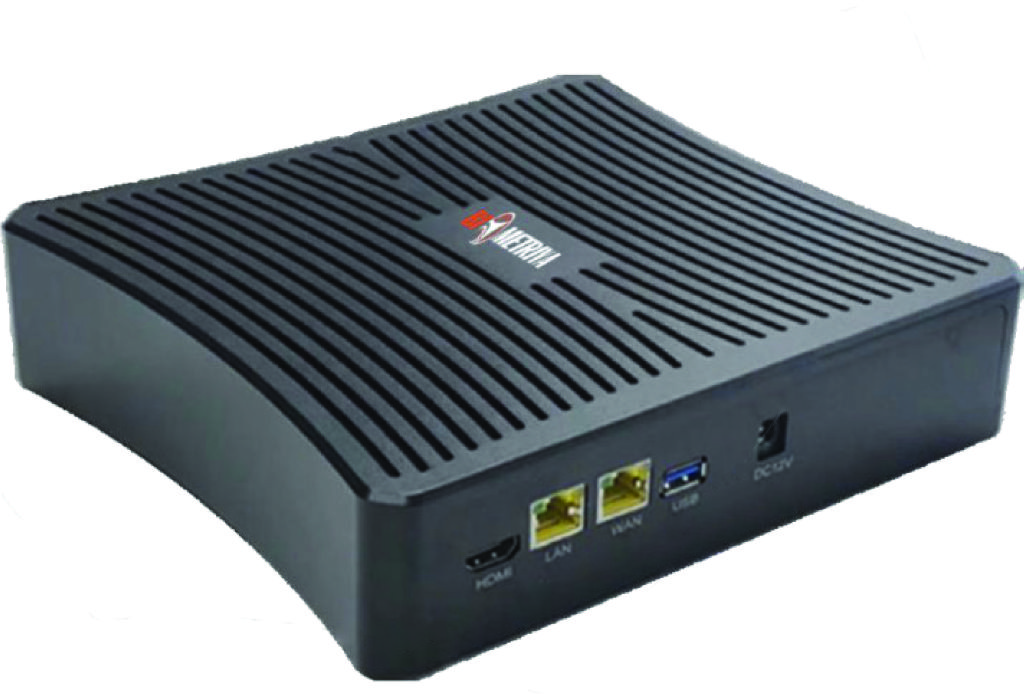
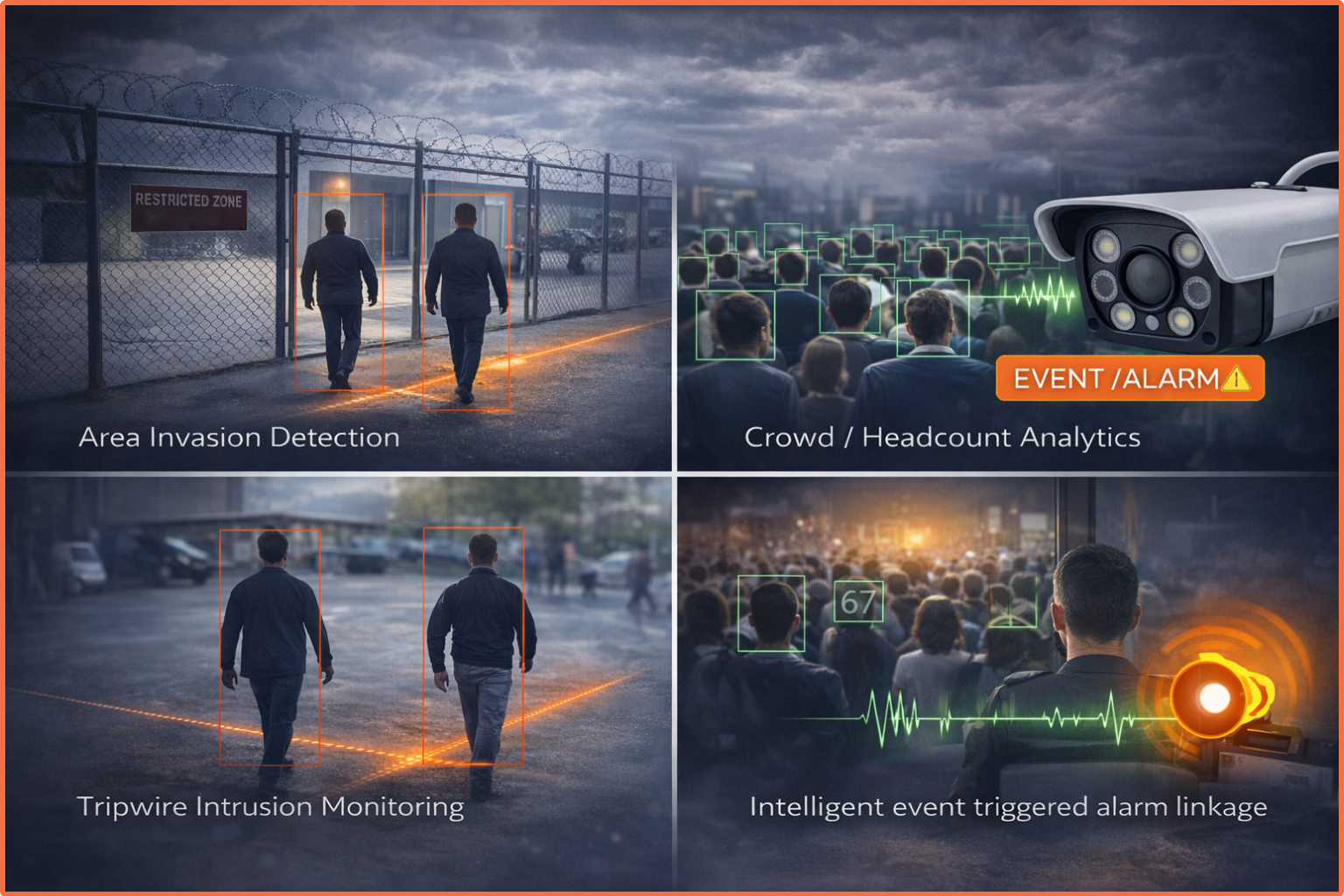
Continuously sending every camera stream to a distant service consumes bandwidth and makes local response dependent on the uplink. Biometriya AI Box can analyze selected streams near the site, while Sentinel AI can coordinate identities, events, investigation and wider operational intelligence. The design can transmit an alert and selected evidence rather than all video, subject to the investigation and retention policy.
Large one-to-many search
A national gallery, enterprise watchlist or cross-site investigation may need more compute, storage and orchestration than a terminal can hold. Central processing is often appropriate, but the search must still have a lawful purpose, carefully managed candidate thresholds, human review where required, strong audit and a policy for gallery quality and retention.
Field and remote-site verification
A managed rugged device such as BMBT 2 may need local capture and comparison when a crew has no reliable connection. Synchronize only after defining identity-cache scope, encrypted storage, device loss response, event ordering, clock integrity and conflict handling. Offline should mean controlled continuity, not invisible operation.
Secure the distributed trust chain
- Inventory device, owner, site, firmware, models and certificates
- Use secure configuration, unique credentials and least privilege
- Protect keys, templates, cached policy and evidence at rest
- Authenticate updates and stage rollout with rollback plans
- Monitor health, tamper, clock, storage and connectivity
- Separate tenants, sites, roles and administrative duties
- Encrypt traffic and authenticate devices mutually where possible
- Limit bulk export and log privileged actions
- Design backup, regional failure and recovery objectives
- Control model, threshold, gallery and policy changes
Do not treat the internal network as trusted merely because it belongs to the organization. NIST zero-trust guidance focuses access decisions on users, assets and resources rather than static network location. For biometrics, that means a terminal or edge appliance should prove its identity and authorization to the service, and the service should not assume every enrolled node may read every gallery.
Minimize before encrypting
Encryption protects data in transit and at rest, but it does not answer whether the data should be collected, copied or retained. Decide whether each workflow needs full video, still images, templates, scores, event metadata or only a final decision. Central search may require a governed template gallery; a simple door may need only a scoped local subset.
Version the complete decision
Store which algorithm, model, threshold, policy, device configuration and gallery version produced a result. When a model is updated, use staged deployment and compare outcomes before fleet-wide activation. A central console should make configuration drift visible rather than assuming every edge node behaves identically.
Design the hybrid boundary before buying compute
- Map decisions: list every capture, match, policy, alert and manual-review decision with its required response time.
- Classify data: identify images, video, templates, identity attributes, scores, events and logs with purpose and retention.
- Define continuity: state what must continue during WAN loss, central outage, device failure and partial synchronization.
- Size honestly: use real gallery size, camera count, frame rate, concurrency, peak traffic, search load and evidence retention.
- Threat-model both planes: include physical edge compromise, stolen devices, malicious administration, API abuse, model substitution and bulk extraction.
- Pilot end to end: test genuine users, exceptions, network impairment, stale cache, revocation, upgrade, rollback and recovery.
Metrics that reveal architecture quality
- Service: capture-to-decision latency, lane transaction time, search completion and alert delivery.
- Resilience: uptime by site, time in degraded mode, cache age, lost events, synchronization delay and recovery time.
- Accuracy: acquisition, match and PAD outcomes by device and model version—not only a global average.
- Capacity: CPU/GPU utilization, queue depth, network bandwidth, gallery growth and storage pressure.
- Security: failed device authentication, privilege changes, drift, unsigned update attempts and unusual export.
- Privacy: raw-media transfer, retention exceptions, deletion completion and access to sensitive biometric records.
The best placement is rarely ideological. A door needs a dependable local decision; an enterprise needs centralized governance; an investigation may need scalable search; and a privacy program needs control over what moves between them. Design those needs as one system, then choose edge and cloud resources to serve it.
Frequently asked questions
Is edge biometric processing always faster?
It can reduce network round trips for local decisions, but total speed still depends on capture, quality, matching, policy, hardware load and physical passage. Measure the complete transaction.
Can an edge access terminal work without the internet?
Yes, if identities and policies are securely cached and the organization defines cache age, revocation risk, offline events and synchronization. Not every identity or zone should necessarily remain available offline.
Is cloud biometric processing less private?
Not automatically. Privacy depends on purpose, data minimization, access, contracts, location, retention and security. Edge can reduce data transfer, while an unmanaged edge device can create different risks.
What belongs in a hybrid biometric architecture?
A common pattern is local capture and time-critical decision, with central enrollment, governance, policy distribution, monitoring, audit, large search and investigation. The exact split depends on the workload.
Should CCTV face analytics run at the edge?
Edge inference can reduce streaming and support local alerts. Central services remain useful for multi-site search, common watchlists, investigation and oversight. Camera count, bandwidth, response time and retention determine the split.
Independent standards and resources
- NIST SP 500-325: Fog Computing Conceptual Model — distributed and federated compute concepts addressing latency, scale and heterogeneous IoT environments.
- NIST SP 800-144: Security and Privacy in Public Cloud Computing — planning considerations for outsourced data, applications and infrastructure.
- NIST SP 800-207: Zero Trust Architecture — resource-focused access, identity and device principles for distributed environments.
- NIST Hardware Security program — platform security and data protection techniques for cloud and edge use cases.
- ETSI Multi-access Edge Computing — edge service concepts including low latency, bandwidth and deployment options.