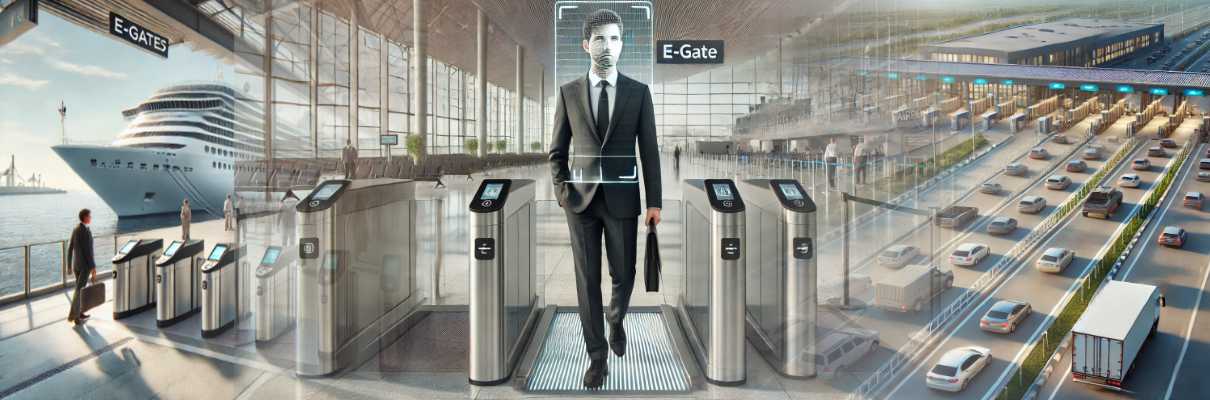
Border management
Faster traveler handling
Use e-gates, kiosks, and biometrics to reduce queue time at critical border checkpoints
Stronger identity assurance
Match the traveler to their document and travel right with more reliable biometric verification
Multiple border modes
Adapt the solution for air, land, and sea operations instead of a single checkpoint model
Scalable operations
Support growing passenger volumes without linear growth in manual intervention
Border Control (Air, Land & Sea)
Biometric traveler processing for smarter, faster, and more secure border operations
Biometriya border control solutions are built to improve identity assurance and traveler throughput across airports, land crossings, and maritime checkpoints. By combining e-kiosks, e-gates, digital travel authorization, and biometric verification, the solution helps authorities reduce queues, strengthen security, and manage higher passenger volumes without turning every journey into a manual process.
Border Journey Flow
Bring biometrics into the full border journey
Border control works best when biometric verification is applied across the broader traveler process, not only at a single gate. Pre-travel data, departure handling, and arrival processing can all contribute to a better balance between speed and security.
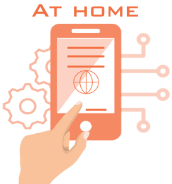
At Home
Digital travel readiness before departure
Travelers complete digital travel authorization and submit identity data before reaching the airport, land crossing, or sea terminal.
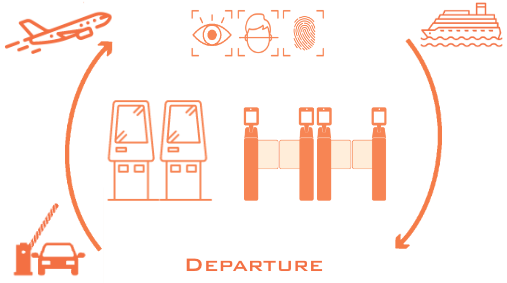
Departure
Biometric verification through kiosks and e-gates
Travelers scan passport and face at kiosks, then move through controlled departure checkpoints with faster and more consistent identity handling.
- Kiosk captures document and face
- E-gate confirms traveler at departure control
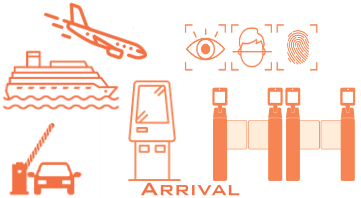
Arrival
Entry verification and traveler admission
At arrival, the same identity model supports e-gate clearance, new traveler registration, and smoother immigration handling with stronger trust in identity.
Journey Design
How the border solution is organized
The strongest deployments align the traveler’s identity flow before departure, during transit, and at the moment of entry or exit.
Travelers can complete pre-travel identity and authorization steps using connected digital workflows before arriving at the border.
Passport scanning, face verification, and identity checks can be orchestrated across departure checkpoints and secure boarding transitions.
Arrival workflows can support new traveler registration, e-gate clearance, and faster immigration handling for eligible passengers.
Improve the checkpoint without weakening the control model
- Reduce wait times at immigration and automated border points.
- Increase traveler convenience by avoiding repetitive identity friction.
- Enhance security through biometric verification instead of relying only on visual document checks.
- Manage growth in travel volumes more sustainably.
Fit different border environments and traveler programs
- Air borders can integrate kiosks, gates, and fast-lane processing.
- Land crossings can benefit from more controlled, higher-assurance traveler handling.
- Sea terminals can support large arrival batches with clearer identity management.
- Trusted traveler programs can use biometric acceleration while preserving strong control.
Recommended Products
Devices commonly used in border control programs
Biometriya mixes OEM scanners, checkpoint-grade terminals, and high-security dual-mode devices depending on the assurance level and throughput requirement.

Face and iris OEM
BioDuo
A flexible OEM platform for e-gates, kiosks, and immigration counters where compact face and iris capture is needed.
View product
High-security authentication
BioDuo2
Advanced dual-mode verification for high-traffic border points and high-assurance traveler identity checks.
View product
Touchless face lane
FacePass
Fast face recognition for automated lanes and controlled passenger movement through border checkpoints.
View product
Compact embedded device
Otto
A compact OEM face device suited to smaller e-gates, kiosks, and supporting traveler verification points.
View product
Program value
Traveler impact
Smoother movement through border touchpoints
Authority impact
More consistent control with less manual pressure
Smarter border control for growing traveler volumes
Well-designed biometric checkpoints help reduce friction at the moments travelers notice most.
Border teams gain scalable identity workflows that fit operational growth and policy needs.
Why Biometriya
Build secure traveler processing around practical biometric workflows
Biometriya combines traveler-facing devices, high-assurance verification, and deployment flexibility to help border programs move faster without sacrificing security.
- Support multiple border modalities with one adaptable solution approach.
- Use the right biometric modality for each assurance and throughput requirement.
- Design for real infrastructure instead of isolated technology demos.
- Keep the program scalable as travel demand and service expectations evolve.
Related insight