Biometric access can confirm a person, ANPR can read a vehicle registration, and video analytics can count movement. None of them alone proves current site occupancy. A dependable site-accountability platform combines entry and exit events, direction, identity and authorization records, vehicle associations, zone changes, and exception workflows into a continuously reconciled operational state.
Why access logs do not automatically produce a live site count
An access log records transactions. A live site count represents current state. The two are related, but they are not the same. If every person and vehicle enters through a controlled lane, exits through a controlled lane, never tailgates, never shares a credential, and never crosses through an offline checkpoint, the transaction history may closely represent occupancy. Real sites are rarely that clean.
Construction projects receive workers from multiple subcontractors, material deliveries, visitors, buses, and short-notice specialists. Industrial facilities combine employees, contractors, drivers, service teams, and restricted operating zones. Campuses may have staff entrances, reception, parking barriers, loading areas, and emergency exits. Every alternate path creates a chance for the recorded count to drift away from reality.
The goal is therefore not a decorative dashboard with a large number. It is an operationally explainable picture of who is believed to be present, which vehicles are inside, where uncertainty exists, and what evidence supports that state.
Count, identity, and authorization answer different questions
A useful design starts by separating three concepts that are often mixed together:
- Counting answers how many people or vehicles crossed a defined line or appear in an area.
- Identification attempts to determine which enrolled person or registered vehicle generated the event.
- Authorization decides whether that person or vehicle is currently allowed to enter the specific site or zone.
Face detection can count a face without recognizing whose face it is. Face recognition can return an identity candidate without proving that the person is authorized for today’s shift. ANPR can read a registration mark without proving who is driving or how many passengers are inside. An access-control decision can authorize a driver while leaving the passenger count unknown.
A trustworthy board preserves those distinctions. It should be able to show verified people, anonymously counted people, recognized vehicles, unresolved plate reads, and policy exceptions without pretending they all have the same confidence.
ANPR, LPR, and the meaning of a vehicle read
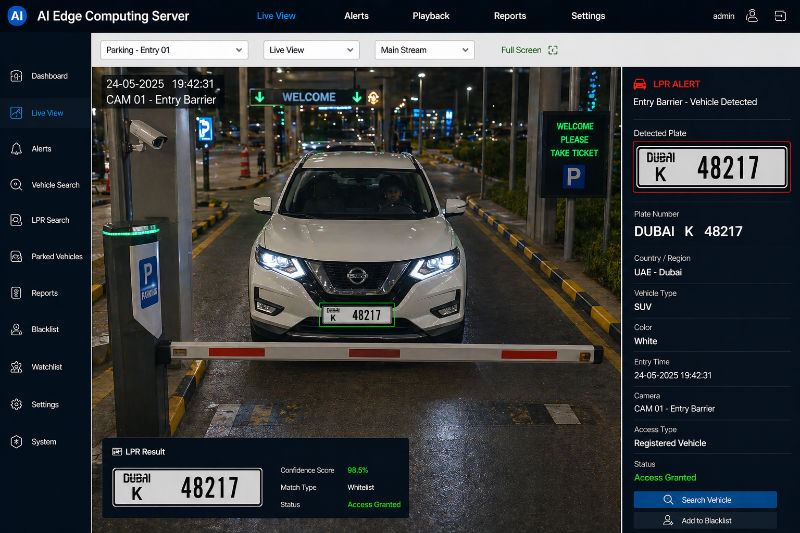
ANPR means Automatic Number Plate Recognition; LPR means License Plate Recognition. The terms describe the same general function in different markets. A camera captures a vehicle plate and software converts the visible registration into structured text. A useful event also includes the checkpoint, direction, timestamp, camera identifier, and a reference image for review.
The plate is a vehicle identifier, not a biometric and not a permanent identity for the occupants. Plates can be unreadable, obscured, changed, duplicated, or associated with different drivers. That is why higher-assurance sites link the vehicle event to an approved visit, delivery, contractor company, driver identity, or assisted inspection rather than treating a plate match as the complete security decision.
Why facial identity helps the people side
Biometric verification reduces dependence on transferable cards and manual lists. At a workforce or contractor entrance, a system such as Biometriya FacePass can connect the transaction to the person who is physically present. The access platform can then check the employee, visitor, or contractor record and write a directional entry or exit event.
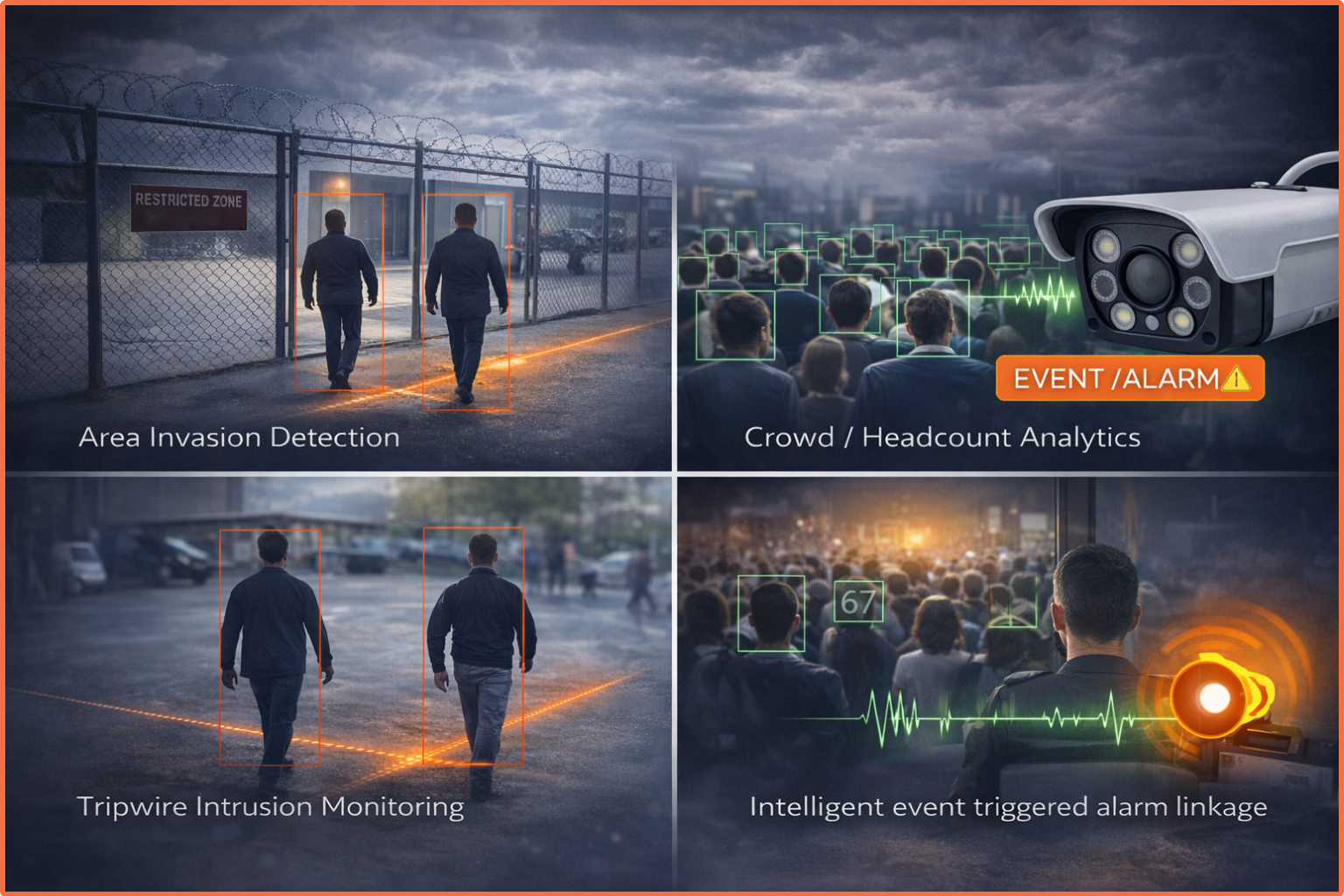
Video intelligence has a complementary role. Sentinel AI can analyze people, movement, and zones at the edge, while Biometriya AI Box can add people, face, perimeter, vehicle, and number-plate analytics to existing CCTV. These systems help detect discrepancies, such as several people passing after one access grant or activity in an area with no matching access event.
Build one event model before building the dashboard
The dashboard should be the result of a clear event model, not the starting point. Each contributing system needs consistent definitions for site, checkpoint, lane, direction, person, vehicle, event time, confidence, and status. Without those shared identifiers, the platform can display several numbers but cannot reliably reconcile them.
Read a face, credential, plate, sensor, or assisted checkpoint event.
Associate the event with a person, vehicle, visit, employer, or unknown record.
Apply current site, zone, time, training, host, and contractor policy.
Use barrier, turnstile, loop, door, or analytics evidence to confirm movement.
Mark the person or vehicle inside, outside, or in an unresolved transition.
Surface duplicates, missing exits, count mismatches, and events needing review.
Use states, not only totals
For each person or vehicle, the system should maintain a current state such as outside, entry pending, inside, zone changed, exit pending, exited, or unknown. When two systems disagree, the record should move into an exception state rather than silently choosing whichever event arrived last.
This approach supports practical correction. A security operator can resolve a missed exit, merge a duplicate identity, associate an unread plate with a delivery, or record an escorted passenger. The correction itself should be audited so the organization knows why the live count changed.
Connect people and vehicles without assuming they are the same record
A driver can be associated with an approved vehicle, but the relationship may be temporary. One vehicle may carry several workers. A bus may bring a complete shift. A delivery driver may remain inside the cab while an escort enters separately. The data model must allow one-to-many and time-limited associations rather than attaching one permanent person to one plate.
At higher-security vehicle gates, the workflow can combine ANPR, driver biometric verification, passenger declaration or verification, delivery details, and barrier confirmation. At lower-risk entrances, a recognized plate and scheduled visit may be enough to route the vehicle to an assisted check. The level of assurance should follow the site’s risk and operating model.
What a useful live site-accountability board should show
Different users require different views. Security needs entry exceptions and denied attempts. Operations needs shift and contractor presence. Safety teams need zone occupancy and muster status. Reception needs visitors and hosts. Logistics needs expected and present vehicles. A single data foundation can support these roles without exposing every personal detail to every user.
| Board area | Useful information | Operational question |
|---|---|---|
| People present | Employees, contractors, visitors, drivers, escorts, and unknown count | Who is believed to be inside now? |
| Vehicles present | Recognized, expected, unknown, delivery, fleet, and unresolved plate reads | Which vehicles are inside and why? |
| Zone status | Occupancy by gate, building, floor, compound, work area, or restricted zone | Where are people expected to be? |
| Readiness | Active shift, induction, credential, permit, visit, or assignment status | Are those present currently eligible? |
| Exceptions | Missing exits, duplicate entry, tailgating indication, access/count mismatch, unread plate | Where is the record uncertain? |
| Emergency mode | Expected at muster, confirmed safe, not yet accounted for, last known checkpoint or zone | Who still requires confirmation? |
The emergency board is a decision aid, not proof of safety
Emergency-accountability procedures must define how people are confirmed after evacuation. OSHA’s emergency action plan requirements, for example, include procedures to account for employees after evacuation. A live presence system can improve the starting list and show the last recorded entry, exit, or zone event, but it should not automatically mark a person safe because the system believes they left earlier.
The right design creates an expected muster population, accepts positive confirmation from muster points or authorized wardens, highlights people not yet accounted for, and keeps the operational team aware of data uncertainty. It complements the emergency plan, training, drills, and human command structure.
Common reasons occupancy records drift
- Tailgating or group passage: several people pass after one authorization event.
- Missed direction: a reader or camera records an event but cannot determine entry versus exit.
- Uncontrolled exits: an emergency or service door allows departure without a normal transaction.
- Vehicle passengers: the vehicle is counted while its occupants are not individually reconciled.
- Shared or substituted vehicles: an approved plate appears with a different driver or purpose.
- Offline checkpoints: events arrive late, out of sequence, or with duplicate identifiers.
- Identity duplication: one person has separate visitor, contractor, and employee records.
- Clock and integration differences: connected systems disagree about timestamps, zones, or event meaning.
A reconciliation engine should detect these patterns and make them visible. Pretending they do not happen produces a clean dashboard but a weak operational record.
Design for privacy, resilience, and controlled access to data
People, face, visitor, workforce, and vehicle data can all become sensitive when combined. The project should define a clear purpose, lawful basis, data owner, retention period, user roles, audit requirements, and deletion process for each type of event. Anonymous count data should remain anonymous where identity is not needed. Biometric identity and plate data should not be retained indefinitely merely because storage is available.
Operational resilience also matters. Gate decisions and local passage records may need to continue during a network interruption. Edge processing can reduce latency and dependency, while store-and-forward logic can synchronize events after connectivity returns. The platform must prevent late events from corrupting the current state and should show operators when a checkpoint is offline or its count is stale.
Where Biometriya components fit
The complete architecture can combine several Biometriya capabilities according to the site:
- FacePass for guided facial identity at high-volume people entrances.
- AI Box for adding vehicle, number-plate, people, perimeter, and safety analytics to existing CCTV.
- Sentinel AI for edge-native face, crowd, headcount, movement, and event intelligence.
- Contractor Management and Site Access for company, worker, document, induction, assignment, and authorization status.
- Biometriya Visitor Management System for invited visitors, walk-ins, hosts, approvals, check-in, and check-out.
- Construction Site Biometric Access Control and Industrial and Factory Access Control for site-wide identity, presence, zone, and exception workflows.
The design does not need every component at every checkpoint. The purpose is to select the right evidence for each risk level and bring the results into one accountable operating picture.
Frequently asked questions
Can ANPR identify the driver or passengers?
No. ANPR identifies or reads the vehicle registration mark. Driver identity requires a separate biometric, credential, document, or assisted verification workflow. Passengers must also be accounted for separately where site policy requires it.
Is face detection the same as facial recognition?
No. Face detection locates a face in an image and can support anonymous counting. Facial recognition compares the face with an enrolled reference to verify or identify a person. A site should use identification only when it has a defined purpose and appropriate governance.
Can an access-control log be used as a muster list?
It can provide the starting population, but it may contain missed exits, tailgating, offline events, or uncontrolled movements. Emergency procedures should positively account for people after evacuation and treat the system’s last-known state as decision support rather than final proof.
How can a site reduce count mismatches?
Control entry and exit paths, confirm direction and physical passage, reconcile biometric and video events, manage vehicle occupants explicitly, monitor offline checkpoints, provide assisted exception workflows, and audit manual corrections.
Reference standards and independent resources
- OSHA 29 CFR 1910.38 — Emergency Action Plans — includes procedures to account for employees after evacuation.
- UK Home Office National ANPR Service technical specifications — defines an ANPR read as a vehicle registration interpretation associated with time and location.
- UK Information Commissioner’s Office video-surveillance guidance — privacy and data-protection considerations for CCTV and ANPR systems.