Use multimodal biometrics when one modality cannot meet the population, environment, threat or continuity requirement alone. Combine modalities deliberately: require both for higher assurance, accept either for accessibility and resilience, use one to narrow candidates and another to confirm, or step up only when risk increases. More modalities do not automatically produce better accuracy or security.
Multimodal should solve a specific failure or assurance gap
A single modality can be highly effective in the conditions for which it was selected and tested. Problems arise when one capture method is expected to work for every person, location and transaction. Outdoor glare affects face capture; worn or damaged fingers affect fingerprint acquisition; eyewear and positioning can affect iris capture; contactless palm systems require a defined presentation zone. Multimodal design can reduce dependence on one condition, but it also adds enrollment time, devices, templates, privacy impact and exception logic.
Begin by naming the gap:
- Coverage: some people cannot enroll or consistently present the primary characteristic.
- Environment: dust, PPE, sunlight, wet hands, gloves, distance or hygiene requirements change capture performance.
- Assurance: a sensitive transaction requires independent biometric evidence or a step-up check.
- Identification: one modality narrows a large gallery while another confirms a candidate.
- Continuity: operations need an alternate route during injury, sensor failure or temporary conditions.
- Legacy integration: existing fingerprint or iris records must coexist with newer face-based workflows.
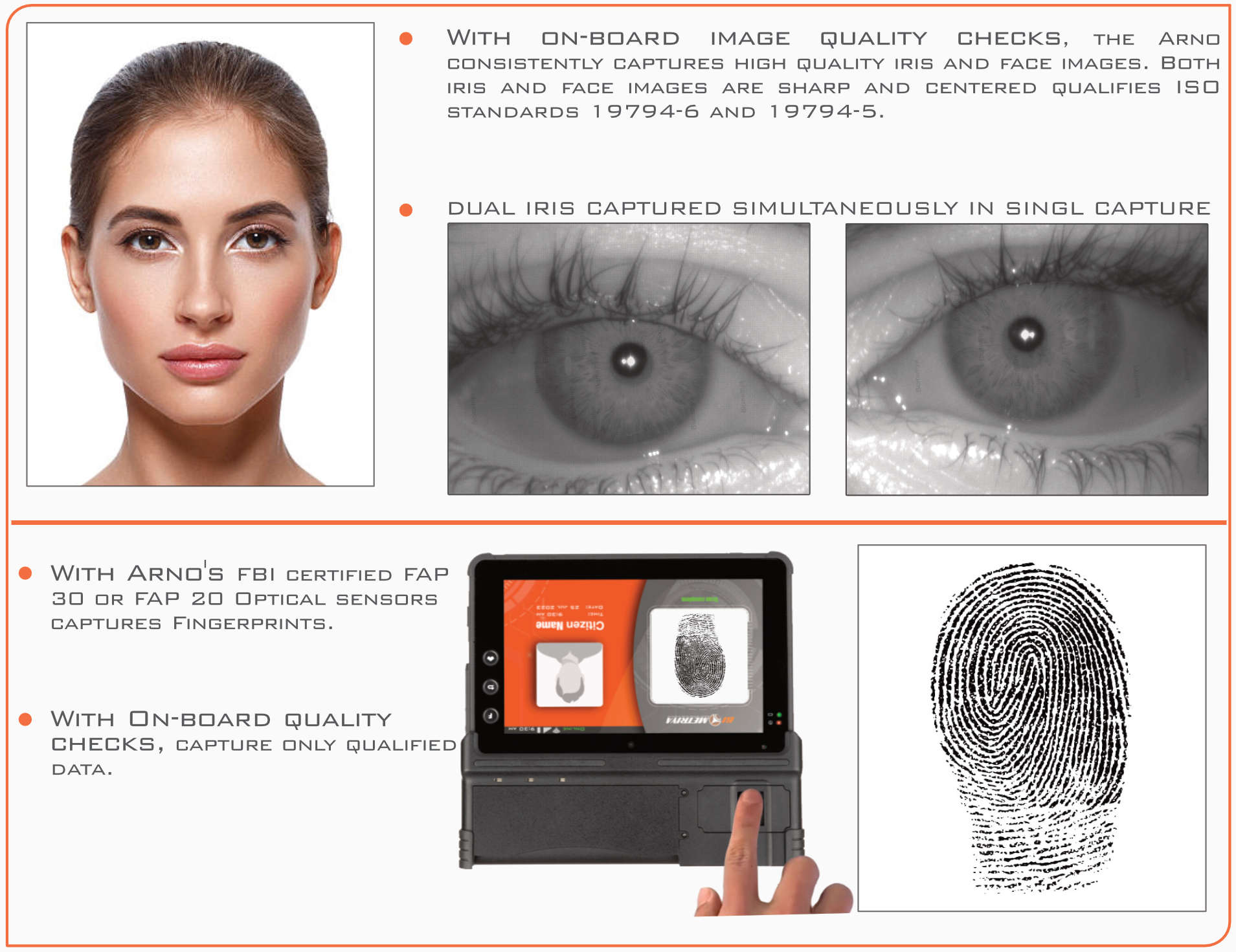
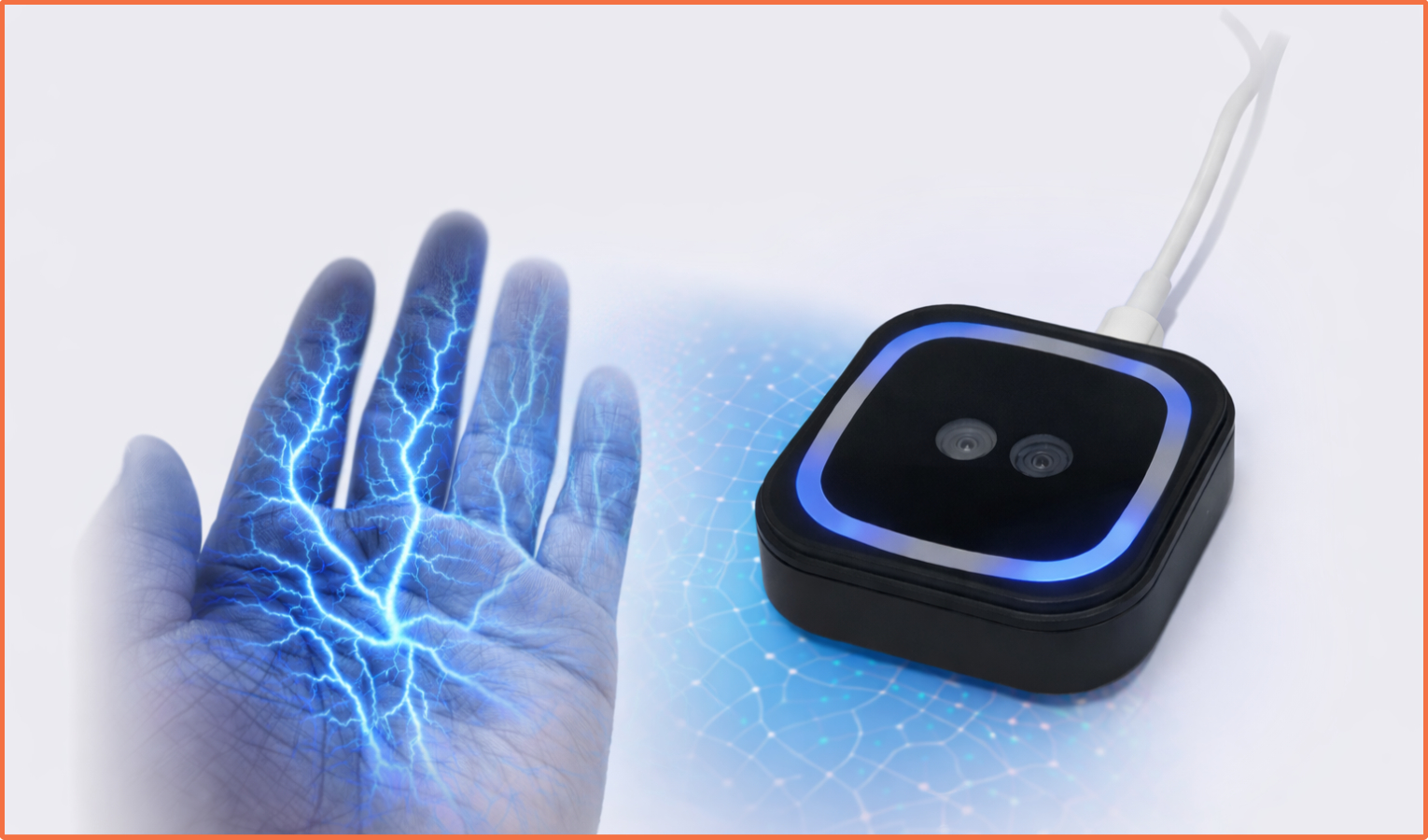
Choose modalities by interaction and environment—not a universal ranking
| Modality | Operational strengths | Conditions to manage | Typical role |
|---|---|---|---|
| Face | Touchless, intuitive, works at a distance, compatible with cameras and documents | Lighting, pose, occlusion, appearance, presentation attacks and camera consistency | Fast primary verification, identification, visitor or access workflow |
| Fingerprint | Mature standards and installed base; compact sensors; familiar enrollment | Worn, wet, dirty or injured fingers; contact hygiene; placement and pressure | High-confidence verification, legacy identity, step-up or fallback |
| Iris | Highly distinctive pattern; can support accurate comparison with suitable capture | Working distance, gaze, focus, eyewear, sensor guidance and user cooperation | High-assurance enrollment, verification or large-gallery identity |
| Palm or palm vein | Large capture area; contactless options; surface and subsurface characteristics | Hand pose, distance, illumination, device form factor and user guidance | Touchless access, healthcare, industrial or dual-mode verification |
These are design tendencies, not promises. Performance depends on the sensor, algorithm, threshold, population and operating condition. NIST maintains separate face, fingerprint and iris evaluation programs precisely because modality performance must be measured rather than inferred from a label.
Do not confuse multiple samples with multiple modalities
Two fingers are multiple instances of one modality. Several face frames are multiple samples. Face plus fingerprint is multimodal. These choices can all improve evidence, but they fail differently and impose different capture and storage requirements. Document whether the system combines sensors, instances, samples, algorithms or modalities.
The fusion rule determines what “multimodal” means
| Policy | Decision logic | Useful when | Primary risk |
|---|---|---|---|
| AND rule | Both or all selected modalities must pass | Independent evidence is required for a high-risk transaction | Genuine rejection and transaction time can rise sharply |
| OR rule | Any approved modality may pass | Accessibility and continuity are more important than combined evidence | The weakest accepted route can determine security |
| Step-up | Primary modality normally passes; another is requested for risk or uncertainty | Most transactions should remain fast but selected cases need more assurance | Poor triggers can create bias, inconsistency or predictable bypass |
| Fallback | Alternative modality is used when the primary cannot be acquired or matched | Population coverage, injury, PPE or temporary sensor conditions vary | Fallback may become an unmonitored shortcut |
| Sequential search | One modality narrows candidates; another confirms or re-ranks | Large-gallery identification or legacy record search | Errors in the first stage may remove the true candidate |
| Score-level fusion | Normalized comparison scores contribute to one combined score | Algorithms and calibration support meaningful combination | Scores are not automatically comparable across vendors or populations |
AND is not simply “twice as secure”
Requiring two matches can make impersonation harder, but genuine users must now succeed twice. If errors are correlated—perhaps face and iris both suffer from the same eyewear or positioning problem—the benefit differs from independent evidence. Model the combined false match, false non-match, failure-to-acquire and attack outcomes using deployment data rather than multiplying brochure figures.
OR improves coverage but inherits the easiest accepted route
If face or PIN or fingerprint can open the same door, an attacker may target the least protected route. OR can be appropriate as an accessibility or continuity policy when each route independently meets the transaction’s minimum assurance. Give every route equivalent audit and expiration rules.
Step-up connects user experience to risk
A person may enter an office with face verification, then use fingerprint or iris for a restricted laboratory, high-value release, identity change or suspicious transaction. Define the trigger, maximum retry, user message, timeout and assisted path. A step-up should be policy-driven rather than requested selectively by an operator based on appearance.
Multimodal enrollment is where system quality begins
Resolve the person and authority before attaching any biometric reference.
Provide notice, lawful processing information, choices and alternatives.
Guide each modality, check quality and repeat before accepting weak enrollment.
Apply the appropriate one-to-many checks and controlled human review.
Record which modalities are primary, required, step-up or fallback for this person.
Secure references, version algorithms, monitor performance and re-enroll when justified.
Do not force every person into the same modality profile
A worker with unreadable fingerprints may use face plus iris; another may use fingerprint as the primary and face as convenience; a visitor may provide face only for one approved appointment. Store an explicit modality policy rather than interpreting a missing template as a system error.
Quality should predict operational value
A template created from a poor sample becomes a recurring exception. NIST’s biometric quality work emphasizes that quality measures should relate to expected recognition performance. Capture operators need immediate, actionable guidance—wrong distance, insufficient iris visibility, partial finger, motion or poor illumination—rather than a generic failure.
Privacy grows with every gallery
Each added modality creates another sensitive reference, processor and possible failure mode. Apply the principles in our biometric privacy and retention guide: defined purpose, minimum data, role-based access, protected transfer, retention by lifecycle, complete deletion and a meaningful non-biometric route where required.
Match multimodal products to the use case
BioDuo 2 combines iris and face capture for identity operations where both modalities are useful. BMBT 4 brings iris, face and fingerprint options into a rugged mobile workflow. Nova supports multi-fingerprint enrollment where higher-quality hand capture is required. EOS supports contactless palm and palm-vein recognition. The product combination should follow the policy—not define it after purchase.
Test the combined transaction in real scenarios
ISO/IEC 19795-2 covers technology and scenario evaluation and includes testing of multimodal implementations. A technology test can show algorithm behavior on a dataset; a scenario test captures sensors, users and workflow in a modeled environment. Multimodal procurement needs both.
- Enrollment: time, failure to enroll, sample quality and duplicate-review workload by modality.
- Verification: first-attempt success, retries, false non-match and false match at each route and fusion rule.
- Acquisition: failure to acquire by user group, environment, PPE, injury and device position.
- Throughput: queue and transaction time for normal, step-up and fallback journeys.
- Attack resistance: presentation attacks against each sensor and attempts to exploit the easiest route.
- Interoperability: template and image exchange where multiple sensors or suppliers are expected to work together.
- Resilience: behavior when one sensor, service or connection is unavailable.
- Privacy: data created, transferred, retained and deleted for each modality and diagnostic path.
Report results by route—not one blended accuracy number
Publish face-only, fingerprint-only, iris-only, palm-only, AND, OR, step-up and fallback outcomes separately. A single aggregate can hide that one modality produces most failures for a group or that fallback traffic overwhelms an assisted desk. Review genuine-user errors and security errors together.
Multimodal biometric design checklist
- Which single-modality problem is the additional modality solving?
- Is each modality primary, mandatory, step-up, fallback or search refinement?
- Does every accepted route independently meet its minimum security level?
- Are thresholds and scores calibrated for the deployed sensors and population?
- Can people enroll successfully, and is a safe alternative available?
- How are duplicate identities and conflicting modality results resolved?
- What happens when one sensor or service is unavailable?
- Are templates, images and events governed separately for every modality?
- Can operators explain the decision without exposing attack-sensitive details?
- Will scenario testing be repeated after sensor, algorithm, threshold or population change?
Multimodal biometrics is most valuable when it gives the operation a better-controlled choice. The goal is not to collect every characteristic; it is to make the required identity decision reliably, proportionately and transparently under the conditions that actually occur.
Frequently asked questions
Are two biometric modalities always more accurate than one?
No. Combined performance depends on the quality of each modality, error correlation, threshold and fusion rule. An AND rule may reduce false matches while increasing false non-matches; an OR rule can do the opposite.
What is biometric fusion?
Fusion combines evidence from multiple samples, instances, sensors, algorithms or modalities. It may happen at sample, feature, score, rank or decision level, or through a sequential workflow.
Should face and fingerprint both be required at every door?
Usually not. Requiring both increases time and genuine-user failure. Reserve dual evidence for transactions whose risk justifies it, or use one as a step-up or fallback.
Can iris or palm replace fingerprint for people with worn fingers?
They may provide an effective alternative if the environment, user population, devices and policy support them. Test acquisition and usability with the affected users.
Does multimodal enrollment create more privacy risk?
It creates more biometric references and processing paths. Collect only modalities justified by purpose, protect each one, limit access and retention, and support deletion and alternatives.
Independent standards and resources
- NIST Biometrics program — modality research, standards, quality, interoperability and technology evaluation.
- NIST Biometric Quality — work relating sample quality to expected recognition performance.
- NIST Biometric Evaluations — face, fingerprint, iris and multiple-biometric evaluation programs.
- ISO/IEC 19795-2 — technology and scenario performance testing, including multimodal implementations.
- ISO/IEC 19795-4 — interoperability performance testing for multi-supplier and multimodal biometric data.